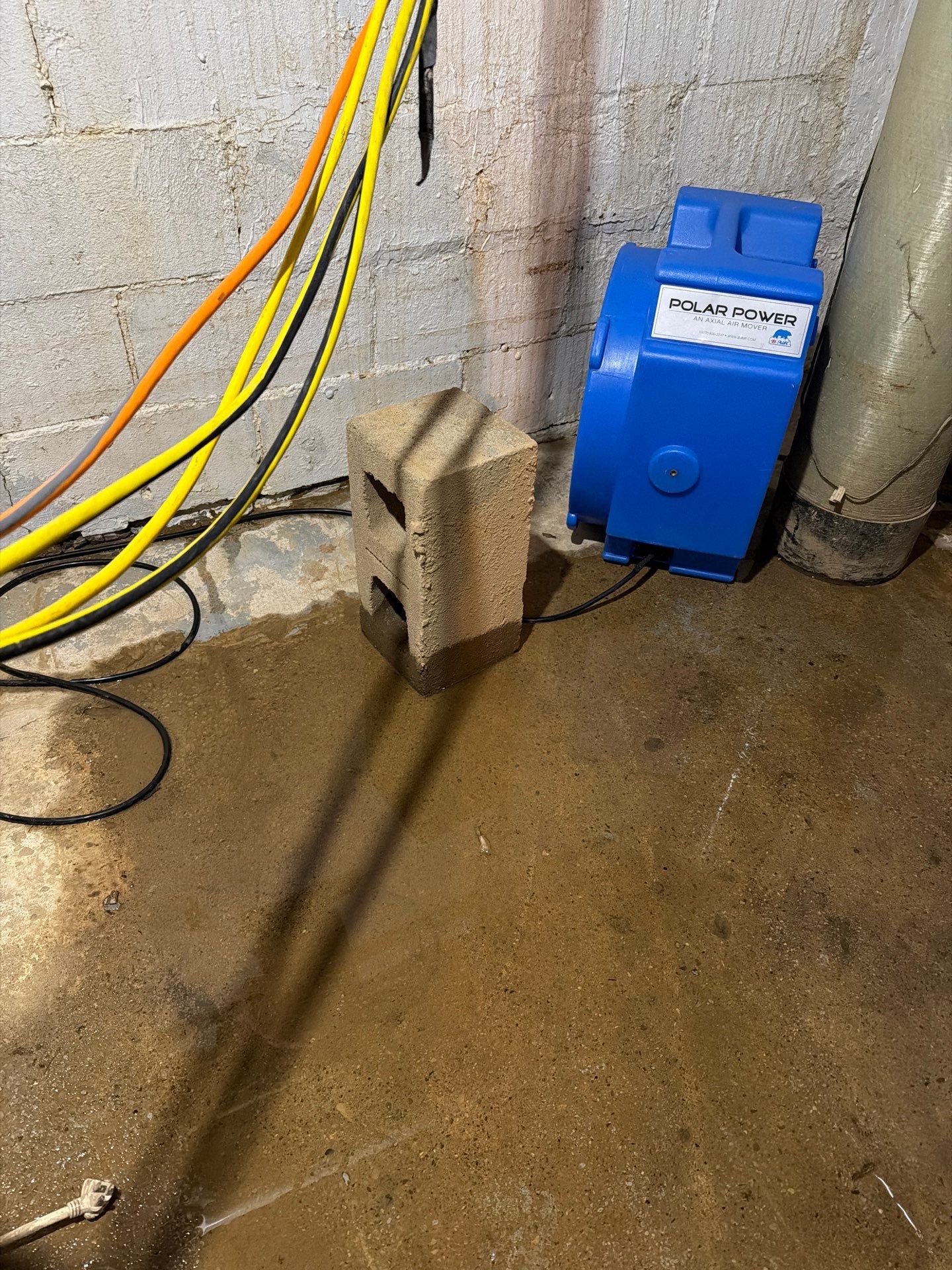
How Subfloor Damage Hides in Plain Sight
The subfloor is the sheet of plywood or oriented strand board nailed to your floor joists. It carries the weight of your tile, your hardwood, your furniture, and you. When water gets to it, the wood fibers swell, the adhesive bond with the finished floor breaks down, and the structural rating of that sheet drops fast. The frustrating part for homeowners in Sagamore is that the signs are subtle until they are not. You might notice tile grout cracking in a straight line, hardwood planks that suddenly cup or crown along one edge, a vinyl floor that feels spongy near the toilet, or a hollow sound when you tap a section that used to ring solid. Sometimes the only clue is a smell coming from the basement ceiling or crawl space, a damp, earthy note that gets stronger on humid Indiana afternoons.
When we arrive on a call, the first thing we do is map moisture with a pinless meter across the entire affected room, then confirm hot spots with a pin meter that reads deeper into the wood. Thermal imaging helps us trace the leak back to its source, which matters because repairing the subfloor without fixing the cause is wasted money. In older Sagamore homes, the leak often traces back to a cast iron stack, a corroded supply stub, or a shower pan that failed at the curb. In newer builds, it is almost always a supply line, an ice maker connection, or a poorly sealed dishwasher. If the moisture readings show saturation above 28 percent in the subfloor, we are usually looking at replacement rather than drying, and the IICRC S500 standard backs that call.
There is also a category of damage that hides under transition strips and along exterior walls, where insulation and drywall wick water sideways before it ever shows on the floor surface. We have pulled up baseboards in Sagamore living rooms and found a six inch band of black, soft sheathing running the length of a wall, all of it fed by a window flashing failure two stories up. That kind of vertical migration is why a thorough inspection looks at more than just the obvious wet spot. It follows the water, not the stain.
What Subfloor Repair Actually Costs in Sagamore
Pricing depends on three things: the square footage that has to come out, what is sitting on top of it, and whether mold has taken hold underneath. For a small, contained area like the footprint under a leaking dishwasher, you are typically looking at 800 to 1,800 dollars to remove the flooring, cut out the damaged subfloor, dry the joists, sister any compromised framing, and install new sheathing. A bathroom with a long-term toilet leak that has rotted the subfloor around the flange usually runs 1,500 to 3,500 dollars before the new finished floor goes back down. Whole-room replacement in a kitchen or living area, especially when hardwood has to be carefully removed and matched, can climb into the 4,000 to 9,000 dollar range. If the damage extends into the joists themselves, structural repair adds another 1,200 to 4,000 dollars depending on span and access.
Category matters too. Clean water from a supply line is the cheapest scenario. Grey water from a dishwasher or washing machine moves the job into a different protocol with antimicrobial treatment, and you can read more about that distinction in our breakdown of grey water damage and category 2 cleanup. Category 3 water from a toilet overflow or sewer backup is the most expensive because contaminated subfloor cannot be dried and reused under any circumstance, a point we cover in detail in our toilet overflow cleanup guide. The contamination level drives both the scope and the safety equipment required, and it directly affects what your insurance carrier will reimburse.
The flooring on top is often the biggest swing in the estimate. A sheet vinyl floor can be cut and pulled in twenty minutes, and the replacement material runs a few dollars a square foot. Engineered hardwood demands careful removal, board by board, with the hope of salvaging enough planks to blend the repair into the surrounding field. Solid hardwood that was nailed down decades ago almost never comes up cleanly, which means refinishing the entire room to hide the seam. Tile is its own conversation, because the mortar bed often has to come out with the subfloor, and matching a discontinued tile pattern can push a homeowner toward replacing the whole floor anyway. These choices are worth talking through before the demolition starts, not after.
Insurance, Timing, and the Hidden Cost of Waiting
Most homeowners policies in Indiana cover sudden and accidental water damage, which includes a burst supply line or a failed appliance hose. They do not cover long-term seepage, which is exactly what most subfloor damage looks like by the time it is discovered. The line between the two is where adjusters spend their time, and it is where documentation matters. When Sagamore Water Restoration responds to a subfloor call, we photograph every moisture reading, log the affected square footage, identify the source, and build a scope that uses the language adjusters expect. That paperwork is often the difference between a denied claim and a covered loss. If you suspect a slow leak has been at work for a while, it is still worth filing, because the sudden discovery of hidden damage can sometimes trigger coverage under the right policy language.
The cost of waiting is real. A subfloor that is wet for two weeks can usually be dried in place if the finished floor comes up. At four weeks, you are almost always replacing the sheathing. At eight weeks, mold has colonized the underside, the joists are at risk, and you are looking at remediation on top of reconstruction. We have seen 1,200 dollar repairs turn into 7,000 dollar projects because a homeowner hoped the soft spot would firm up on its own. It will not. There is also a resale angle worth mentioning. Buyers and their inspectors are sharp about soft floors, and a single spongy step near a bathroom door can trigger a renegotiation that costs more than the repair itself would have. Fixing it now, with proper documentation, protects both the structure and the value of the home.
If you are seeing signs now, the smartest move is to get a moisture inspection on the calendar this week. Our water damage restoration team handles these inspections across Sagamore and the surrounding Sagamore Estates (Custom Home Sites) area, and we will tell you honestly whether you have a real problem or just a cosmetic one.