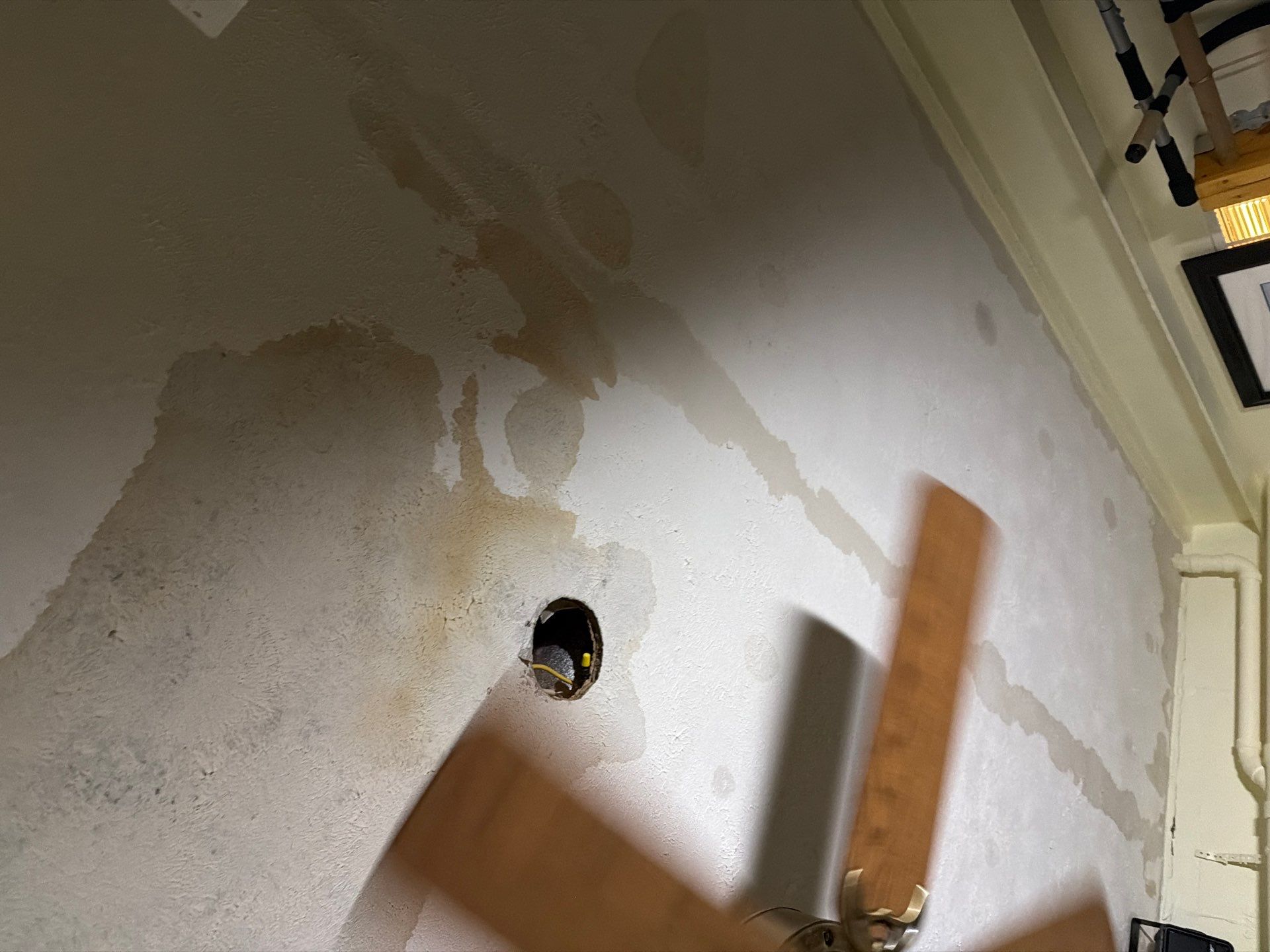
The 60 minute Protocol
Work top to bottom. Each step has a target completion window inside the first hour. Do not skip ahead.
Step 1: Stop the Source (Target: 0 to 5 minutes)
- Locate the main water shutoff. In Sagamore homes this is typically on the street side wall of the basement, in a utility closet, or at an exterior wall near the meter.
- Turn the valve clockwise until firm. Gate valves require 4 to 6 full rotations. Ball valves require a 90 degree turn.
- If the leak is appliance specific (washer, dishwasher, toilet, water heater), use the local stop valve under or behind the unit instead.
- For a frozen pipe burst, shut the main AND open a downstairs faucet to relieve line pressure.
- If the shutoff valve is corroded, seized, or spins without resistance, call the municipal water department for a curb stop shutoff at the street.
- Tag the location of the main shutoff with a bright zip tie or label after the event so future emergencies cost seconds, not minutes.
For pipe specific scenarios, the pipe burst response guide covers shutoff variations by plumbing era.
Step 2: Cut Power to Affected Zones (Target: 5 to 10 minutes)
- Go to the main electrical panel. If the panel itself is in a wet area, do not enter. Call the utility.
- Switch off breakers feeding any room with standing water, wet outlets, or wet ceiling fixtures.
- For ceiling leaks, kill the breaker for that room's lighting circuit before the drywall sags.
- Do not step in water to reach a switch. Water plus 120V is fatal at 100 milliamps.
- If breakers are unlabeled, shut the main disconnect at the top of the panel. Restoring partial power later is safer than guessing under pressure.
Step 3: Document Everything (Target: 10 to 20 minutes)
- Take 30 to 50 photos: wide shots of each room, close ups of waterlines on walls, the source, ceiling staining, and visible damage to flooring.
- Shoot a 60 to 90 second video walkthrough narrating what you see.
- Capture serial numbers and model plates of any damaged appliances.
- Note the time the leak started, the time it was stopped, and the water source category (clean, grey, or black).
- Photograph contents inside cabinets, closets, and drawers before you move anything. Insurance adjusters need pre disturbance proof.
- Back up all media to cloud storage immediately. A phone lost during cleanup takes the claim file with it.
Step 4: Identify Water Category (Target: 20 to 25 minutes)
- Category 1: supply line, water heater, ice maker. Clear, no odor.
- Category 2: dishwasher discharge, washing machine drain, aquarium. Cloudy or soapy.
- Category 3: sewage, toilet bowl with waste, groundwater, flood. Treat as biohazard.
- Category 1 water degrades to Category 2 within 48 hours and to Category 3 within 72 hours once it contacts building materials.
If you are uncertain, assume the higher category until a technician verifies. Category determinations follow the IICRC S500 classification system.
Step 5: Protect Occupants (Target: 25 to 30 minutes)
- Move children, elderly residents, and pets out of affected rooms.
- For Category 3, evacuate the affected level entirely. Do not re enter without N95 minimum and nitrile gloves.
- Open windows for ventilation only if outside humidity is below 60 percent. Otherwise keep closed.
- Shut off HVAC if return vents are in or near wet areas to prevent contaminant distribution.
- Remove shoes worn through Category 2 or 3 water before walking on dry flooring. Bag them for disposal or decontamination.
Material damage threshold by exposure time
Typical thresholds under Central Indiana humidity and indoor temperature conditions.
Step 6: Remove Surface Water (Target: 30 to 40 minutes)
- Use a wet/dry shop vac rated for at least 5 gallons. Standard household vacuums will fail and create a shock hazard.
- Push water toward a floor drain or vacuum it directly. Empty the tank when it reaches 80 percent capacity.
- Lift area rugs off hardwood. A saturated 8 by 10 wool rug holds 30 to 50 pounds of water and will stain the floor below within 2 hours.
- Do not use a household mop on Category 2 or 3 water. You will contaminate the mop and spread pathogens.
- For finished basements, prioritize the lowest point first. Water finds its level and standing depth doubles drying time per inch.
Step 7: Move and Elevate Contents (Target: 40 to 50 minutes)
- Lift furniture legs onto foam blocks, plastic tabs, or aluminum foil squares to stop staining of carpet and hardwood.
- Move electronics, paper goods, photos, and upholstered items to a dry, climate controlled room.
- Pull books off lower shelves. Wet hardcovers double in thickness within 90 minutes.
- Remove drawer contents from any wet dressers or cabinets to reduce drying load.
- Separate salvageable items from total losses in two distinct staging areas. This prevents cross contamination and speeds the inventory list for your adjuster.
- Wet documents that cannot be air dried within 24 hours should be sealed in a bag and frozen. Freezing halts ink bleed and mold growth until a recovery specialist can process them.
Step 8: Begin Airflow (Target: 50 to 55 minutes)
- Position box fans at floor level, angled across the wet surface, not straight down.
- Maintain ambient temperature between 70 and 80 degrees F. Drying rates drop sharply below 65.
- If you own a dehumidifier, run it on the highest setting and empty it hourly.
- Do not deploy fans if Category 3 water is present. You will aerosolize contaminants.
- One residential dehumidifier covers roughly 300 to 500 square feet. Larger losses require commercial low grain refrigerant units that mitigation crews bring on site.
Step 9: Call for Professional Mitigation (Target: 55 to 60 minutes)
- Contact Sagamore Water Restoration for a free assessment. Provide the timeline, water category, affected square footage, and number of floors involved.
- Have your insurance policy number ready. Review the water damage claim process for documentation requirements.
- Expect crew arrival in most cases within 2 hours of the call.
- Do not sign anything binding until you have read the scope of work and approved the drying plan in writing.
- Ask the dispatcher what equipment will arrive on the first truck so you can clear access paths and parking before crews stage.
Step 10: Hold the Line Until Crews Arrive
- Continue running fans and dehumidifier if Category 1 or 2.
- Keep documenting. Take new photos every 15 minutes.
- Do not cut drywall or pull flooring. Mitigation crews need to map moisture first using thermal imaging and pin meters.
- Avoid stepping repeatedly through wet zones. Each pass drives moisture deeper into the subfloor.
- Write a one page summary of the incident timeline, actions taken, and questions for the lead technician. Hand it over on arrival to compress the intake interview.