Commercial Water Restoration in Sagamore, IN
From the lift pit to the ceiling plenum, Sagamore commercial water losses dried to documented readings.
When Sagamore homeowners need Commercial Water Restoration, Sagamore Water Restoration responds 24/7 with certified technicians, fast equipment deployment, and claim ready documentation. Call (765) 978-5086 for immediate dispatch.
- Service: Commercial Water Restoration for Sagamore homeowners
- Service area: Sagamore, IN and surrounding areas
- Response time: Emergency calls from Sagamore dispatched immediately, day or night
- Licensed and insured (License #RC21100059)
- Serving Sagamore, IN since 2018
Commercial Water Damage Restoration in Sagamore
For offices and other commercial buildings in Sagamore, we'll handle water extraction and drying at any hour.
Site Conditions
Properties near the White River carry added flood risk in heavy rain. A high water table can keep water against foundations and lower levels after a storm. Your building's own drains and roof get checked on the first walkthrough with whoever manages the property.
We cover commercial properties across Sagamore, including the area around Sagamore Golf Club and Sagamore Club Clubhouse. We also handle commercial water losses in Carmel, Fishers, Downtown Noblesville and Sheridan.
Commercial Water Restoration for Sagamore Businesses
Patient files, charts and the paper nobody has scanned yet sit in the rooms that flooded, and those have a shorter window than the building does. Paper that stays wet moves from salvageable to lost in a matter of days. A crew dispatches to commercial water losses in Sagamore within 2 hours, stabilizes the space, and triages records and contents for salvage while the structural drying gets set up.
Before a crew sets foot in your building, the team sends the certificate of insurance, the W-9 and the safety paperwork your management office requires, and the crew badges in the way your access policy says. Sagamore Water Restoration keeps that routine on every commercial job in Sagamore, so building access holds nothing up while the water is still moving.
Electrical and IT rooms run on a different protocol. Nothing gets touched until the circuits are deenergized with your electrician and your IT contractor has moved or protected what can be moved. Sagamore Water Restoration crews then dry those rooms under tight humidity control, with readings taken more often because the hardware in them has a narrower tolerance than the rest of the building. Energizing happens after the readings clear and your contractors have signed off on bringing the room back up.
Cause documentation happens before the evidence disappears. Crews photograph the failed component, the water path and the saturation pattern, note the time the source was isolated, and keep the failed part when it's removable. Cause is one of the first things a carrier asks about, so Sagamore Water Restoration treats source photographs as part of the job. Your plumber's or your engineer's report goes into the same file.
Phone before staff start cleaning up, so the first photographs show the loss as it was found. Sagamore Water Restoration documents the wet areas of your Sagamore building and sets the drying plan from the moisture map, which gives your carrier and your owner the same starting record.
Signs You Need Commercial Water Restoration
If you notice any of these in your Sagamore building, schedule a free inspection before the issue worsens.
Classroom floor tile feeling soft or lifting along an exterior wall after heavy rain
Rust staining at the base of steel studs, shelving uprights or racking posts
Cove base pulling away from gypsum board along a corridor or exterior wall
The water meter still turning overnight while every fixture in the building is shut off
Water pooling at the base of an interior column or along a demountable partition track
Standing water in the lift pit, or a pit alarm showing on the monitoring panel
Flush valve running over a weekend with water seeping into the hallway carpet
Baseboards swelling at the bottom of a wall in an office suite
Carpet tile edges curling or lifting where the adhesive underneath has released
A shutoff valve or supply line weeping behind an access panel in a janitor closet
How Sagamore Water Restoration Handles Commercial Water Restoration
We follow these steps in order on every Sagamore job.
Power and Panel Check
Before equipment goes in, your electrician deenergizes circuits that serve wet areas, and the crew checks outlets and floor boxes for moisture. Drying equipment then runs on protected circuits with the load spread across panels.
Containment and Zone Planning
Affected areas get polyed off and put under negative pressure where the water category calls for it, with corridors and egress kept clear. Zone boundaries get drawn with your management office so unaffected tenants keep working.
Overhead Water and Ceilings
Sagging ceiling panels are punctured over protection so trapped water drains into a controlled spot. Wet tile and insulation come down, and the grid gets checked before the plenum above it gets dried.
Structural Drying Design
Dehumidification gets sized from affected cubic footage and material porosity, with dry air ducted into ceiling plenums, wall cavities and shafts. Air movers get placed to keep surface air moving, and the calculation gets revised as readings change.
Clearance Verification
Previously wet materials get read against dry standard readings from the same materials in an unaffected part of the building. Equipment comes off the floor once those numbers are documented, and containment comes down after that.
Commercial Water Restoration in Sagamore
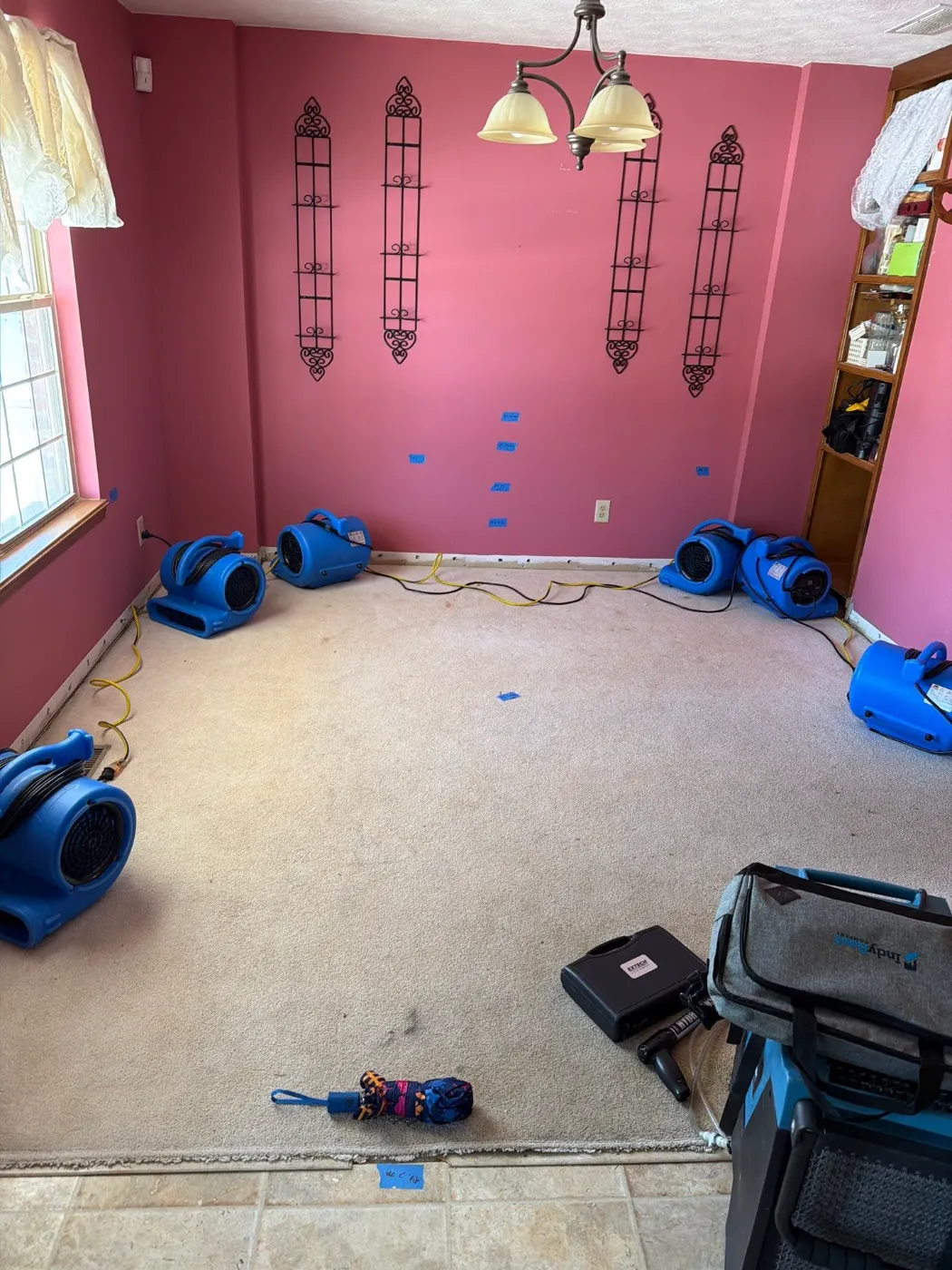
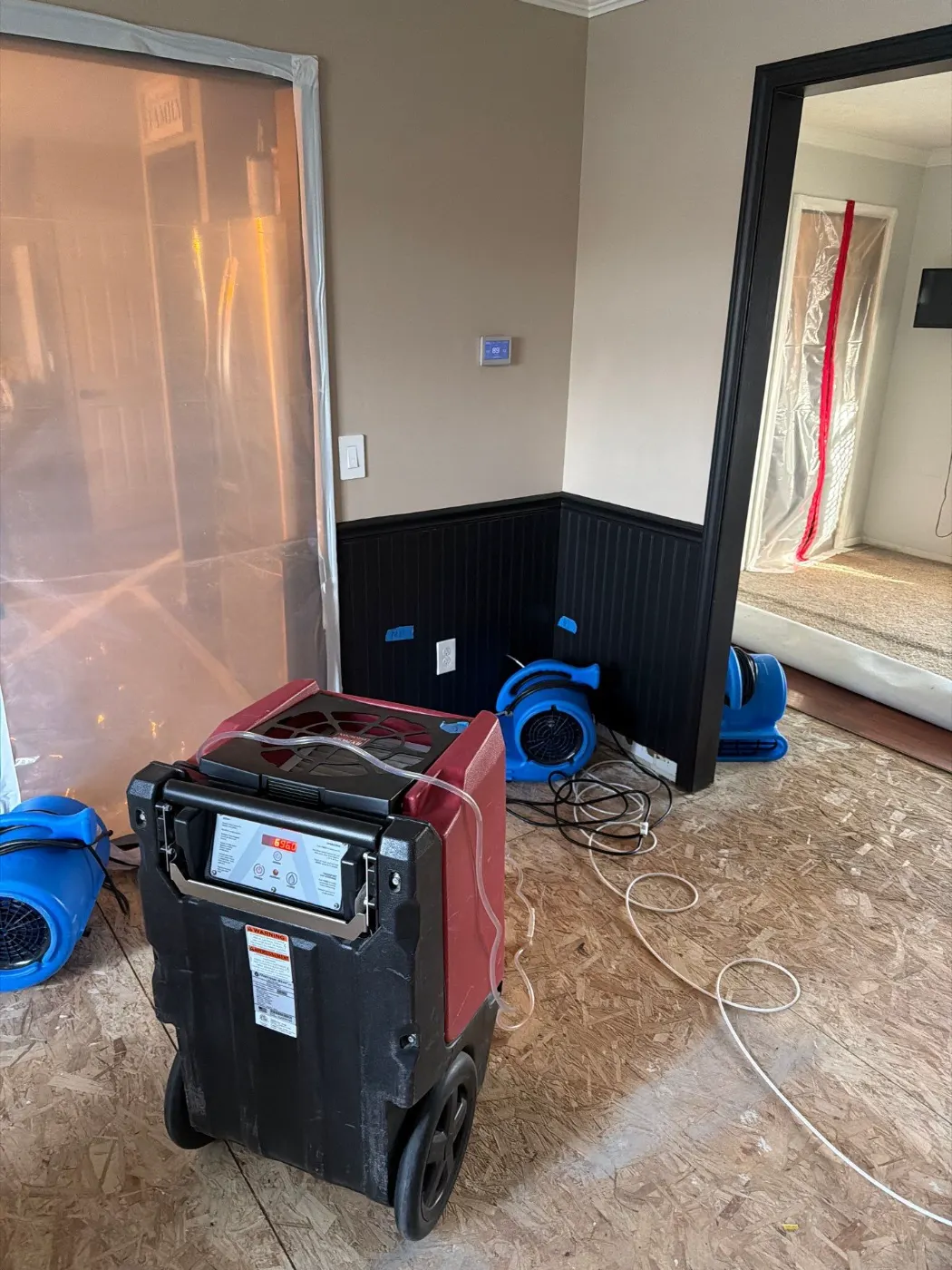
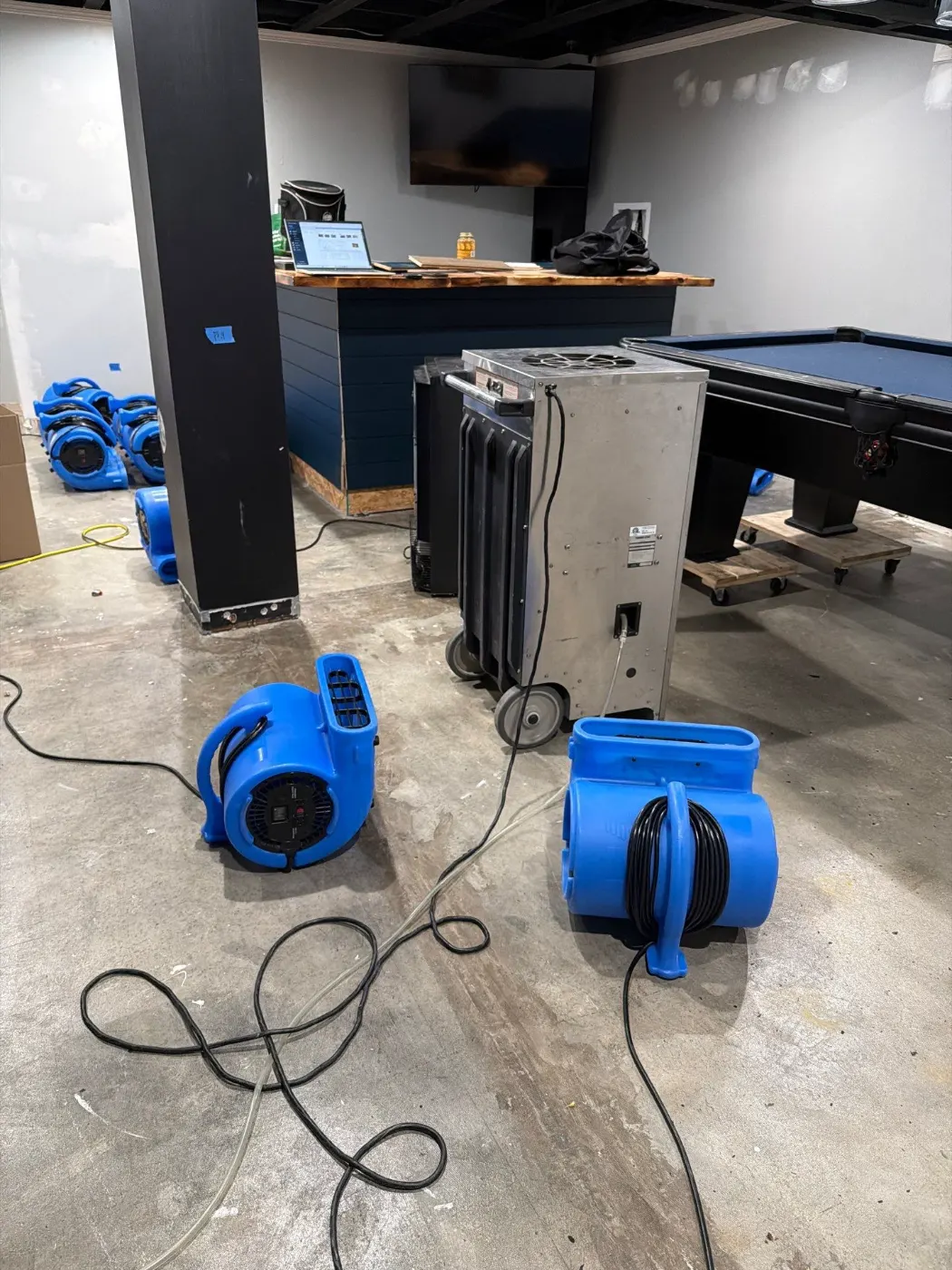
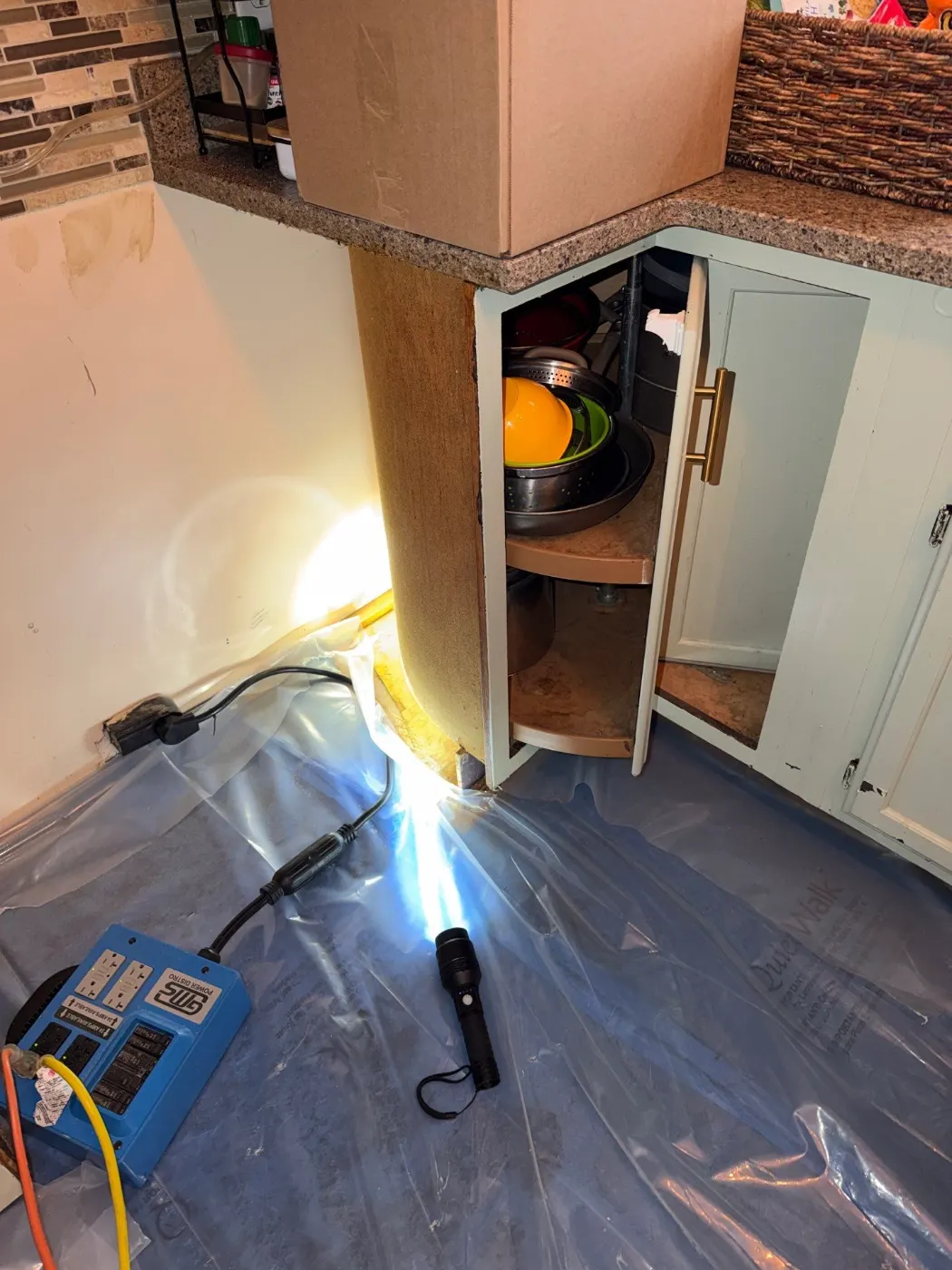
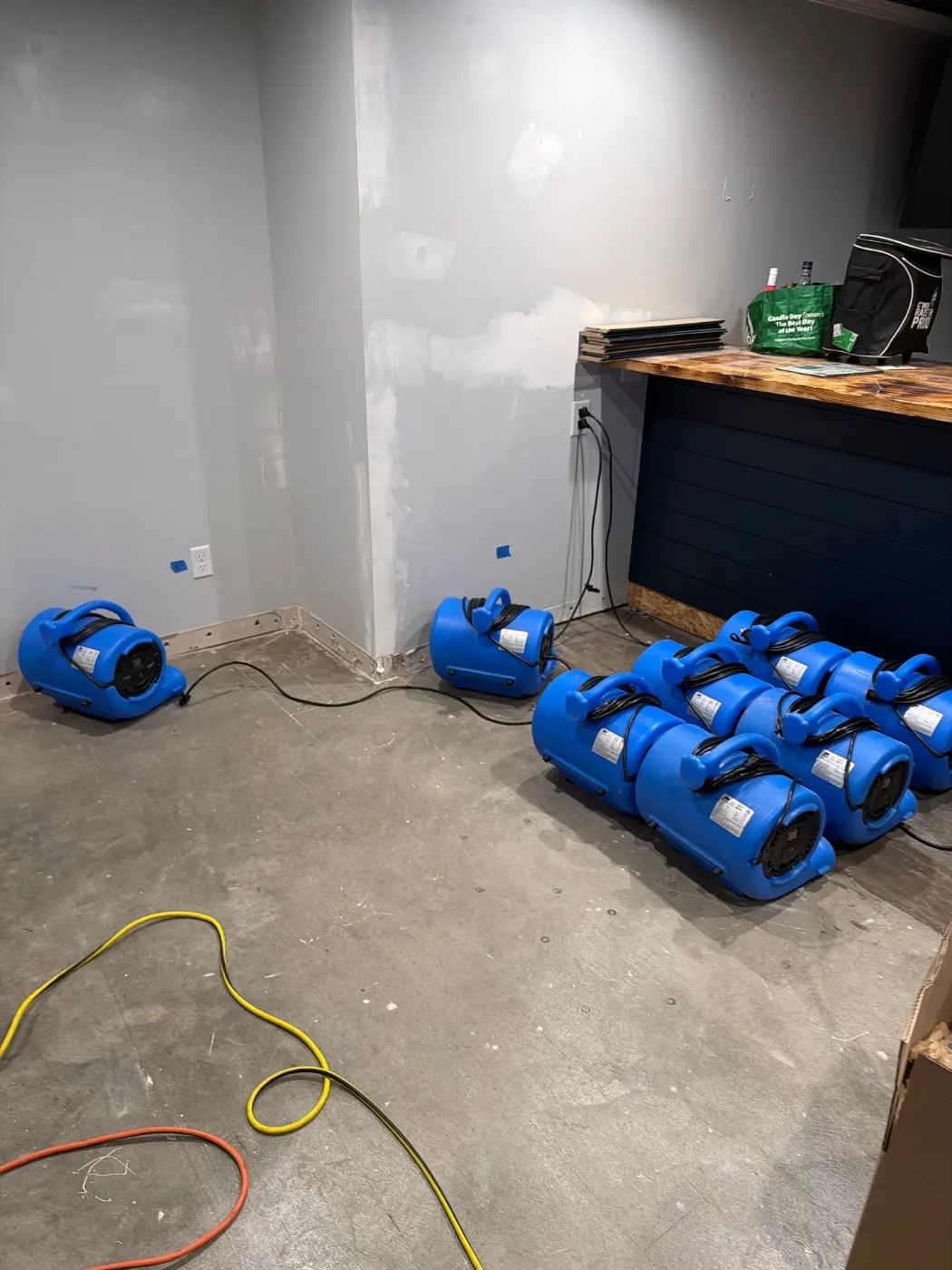
Photographs from real commercial water restoration jobs completed by our crew in Sagamore and surrounding areas.
Commercial Water Restoration FAQ
Questions Sagamore property managers ask us about commercial water restoration.
Guidance and Standards for Commercial Water Restoration
- The ANSI/IICRC S500 is the published standard for professional water damage restoration. The current edition is the Fifth Edition, 2021. IICRC S500 Standard
- EPA advises drying water damaged areas and items within 24 to 48 hours to prevent mold growth. EPA: A Brief Guide to Mold, Moisture and Your Home
Sagamore Neighborhoods We Serve
We take commercial water restoration calls in every part of Sagamore. Pick your neighborhood for local details.
Other Restoration Services in Sagamore
Sagamore Water Restoration handles the full scope of restoration work. Explore our other services below.
Water Damage Restoration in Sagamore
24/7 emergency response. IICRC certified water restoration from extraction to full dry out.
Learn more →Basement Flooding in Sagamore
Basement water emergencies handled fast. Extraction, drying, mold prevention.
Learn more →Sewage Cleanup in Sagamore
Category 3 biohazard cleanup. Full containment, decontamination, structural restoration.
Learn more →Request Commercial Water Restoration
Reach Us Directly
Our team is available 24/7 for emergencies and ready to schedule inspections during business hours.
Need Immediate Help?
For active water or mold emergencies, call us directly. We are available 24/7.